An office chair is made up of multiple important parts, all of which function together to ensure comfort, support, and mobility. Knowing all the different parts of an office chair is very important in choosing the right chair, along with in keeping it in good situation. The following is a comprehensive list of office chair parts and their functions.
Seat
The seat is the main part of an office chair where a person sits. The seat is usually pillow with a foam pillow for comfort. The pillow is usually covered with fabric, mesh, or leather. A good seat is one that is spacious enough to support a person comfortably. Most office chairs are designed with a waterfall side, a design feature that makes sure there is enough thigh support and improved blood flow.
Backrest
The backrest is a part of an office chair designed to support a person's spine. The backrest is usually low, medium, or high, depending on the chair's design. An ergonomic backrest is designed to support a person's spine by conforming to its curve. Some office chairs are designed with a mesh back for improved breathability.
Lumbar Support
Lumbar support is a critical feature of a chair, it supports the lower back place of the body. It ensures that the curvature in the back is maintained and prevents slouching.
Armrests
Armrests provide necessary support for the arm, which otherwise causes strain on the shoulders and neck place. It may be a fixed or adjustable armrest, depending on the type of chair.
Headrest
Headrest is a part of a chair that provides necessary support for the head and neck place, especially for reclining positions. It prevents strain on the cervical place of the spine and ensures maximum comfort for the user.
Height Adjustment Mechanism
This mechanism allows users to place the height of the chair per their requirements, i.e., as per their height and desk height. The most common type of height changes mechanism in a chair is a gas lift system, which allows for easy and smooth changes by a simple lever action. This ensures that the user sits comfortably, placing their feet flat on the floor and maintaining a comfortable bend in their legs.
Tilt Mechanism
This mechanism let the chair to recline backwards. This helps in reducing back pain and encourages movement when a person sits in a chair.
Seat Depth Adjustment
Seat depth changes let a person to move the seat of the chair forwards or backwards. This ensures that the thighs are good supported and a small gap is maintained between the seat and the back of the knees.
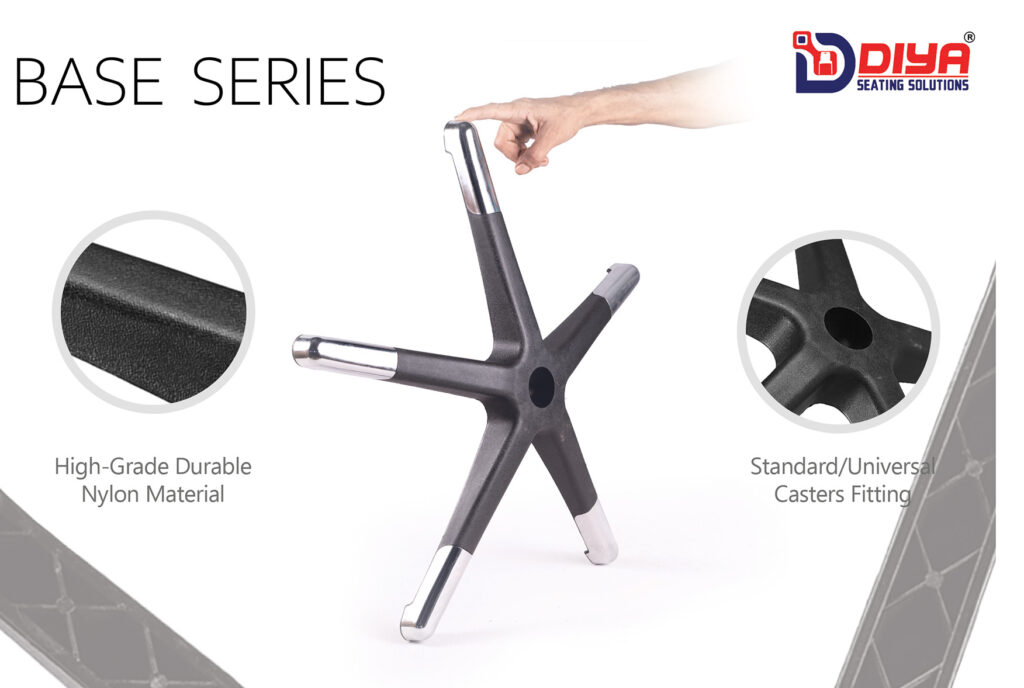
Base
This is the part of the chair that touches the floor and ensures the chair does not fall over. Most office chairs have a five-point foundation, which ensures that the chair does not hint over.
Casters (Wheels)
Casters are the wheels that are attached at the foundation of the chair and facilitate easy movement of the chair. The casters are made in a way that let easy movement of the chair on different floors, such carpets and hard floors. Good-quality casters make it easy for a person to move the chair, thus improving convenience.
Swivel Mechanism
The swivel mechanism of the chair allows for rotation of 360 degrees. This is helpful in reaching multiple parts of the workspace without straining the body. It increases flexible and efficiency in performing tasks.
Upholstery and Covering
The provide of the chair is important for comfort and aesthetics. It may be made of multiple materials, including fabric, mesh, leather, and real leather.
Conclusion
There are many parts to an office chair, and each one has a job to do to make it comfortable and useful. It may include a seat, back, foundation, and casters, between others. All of them help in the effective functioning of the chair.
Knowing the parts of the chair and their roles is helpful in choosing a chair that is suitable for providing the need comfort and efficiency. Investing in a well-designed office chair is important for creating a comfortable and efficient workspace.
Comments
Post a Comment